
Late December is always a good time to reflect on the year that has passed and to look ahead to the upcoming 12 months. Investors will look for emerging trends to try to get ahead of the crowd with their plays in early 2026.
This article focuses on which gambling companies are poised for success in 2026 and which are bets to be avoided. Some are poised for a comeback in 2026, while ohers are looking to continue beating expectations by delivering consistent results. The three companies that could have a strong year are all vastly different in their makeup.
Best
1. DraftKings
DraftKings had a turbulent 2025. It started the year strongly, revisiting the $50 share price briefly in February for the first time since 2021. The success of prediction market sites like Kalshi began to erode investor confidence in DraftKings’ ability to compete though. Kalshi was targeting people in all 50 states, as opposed to DraftKings, which had to confine its efforts to the 30 states with legal online sports betting.
will only offer sports prediction markets in states where it doesn’t have a traditional sportsbook
However, DraftKings worked hard behind the scenes to catch up with prediction markets. It rolled out DraftKings Predictions in December, just in time for the holiday season. Importantly, it has managed not to annoy state regulators in which it already has sportsbooks. DraftKings will only offer sports prediction markets in states where it doesn’t have a traditional sportsbook.
That still means it can now offer contracts in California and Texas, which combined have more than 71 million people. It has also gotten ahead of FanDuel in rolling out a prediction product, which is important in grabbing the attention of old-school sports bettors.
DraftKings has spent big on marketing costs in recent years, but it’s now finally reaching profitability. Q2 2025 was its second profitable quarter, so it’s no longer just a cash-burning business. It will also benefit as more states legalize online casinos. Then there’s the decent current entry point, as the DraftKings share price has dropped 33% over the past three months.
2. Las Vegas Sands
Las Vegas Sands is not focused on online gambling. Instead, it prefers to stick in its own lane and deliver an enjoyable land-based casino experience to gamblers visiting Singapore and Macau.
The company’s results exceeded expectations. Its $3.33bn revenue was better than the forecasted $3.06bn in Q3, thanks to its ability to attract high-value tourists. It’s doubling down on its Singapore presence by investing more than $8bn in the Marina Bay Sands in the coming years to improve the property.
initiated a $2bn share buyback in October
Las Vegas Sands management believes the current share price is undervalued, which is why it initiated a $2bn share buyback in October. It also increased the annual dividend, a positive sign.
The company is not resting on its laurels, as Las Vegas Sands is constantly looking to break into new markets. It’s leading the lobbying efforts to get commercial casinos in Texas. While traditionally a conservative state, if Las Vegas Sands’ efforts are successful, it’s well-positioned for quick entry. Las Vegas Sands owner Miriam Adelson has a majority stake in the Dallas Mavericks, and the company already has a parcel of land in Texas to develop a major casino resort.
While the share price has increased 60% over the past six months, it’s not even halfway towards its all-time high of $138.93.
3. Gaming and Leisure Properties (GLPI)
Anyone looking for a high-dividend stock heading into 2026 should look no further than Gaming and Leisure Properties (GLPI). Rather than running casinos, it owns the land on which they’re built. That means they’re getting inflation-linked monthly rent from major casino companies that are locked into decades-long contracts.
GLPI currently has a portfolio encompassing 69 premium gaming facilities across 20 states. This includes popular resorts like the Hard Rock Hotel & Casino Biloxi and the Horseshoe St. Louis.
current dividend yield is a healthy 7%
The current dividend yield is a healthy 7%, and the highly predictable rental income is not directly linked to the casinos’ profitability. This also means it has lower stock price volatility than many traditional gambling stocks. That gives you access to a more defensive play in a somewhat volatile industry.
Worst
Some companies are standing out for the wrong reasons heading into 2026. Regulatory headwinds, mounting financial pressures, and tax hikes are among the reasons why these three companies may struggle over the next 12 months.
1. Caesars Entertainment
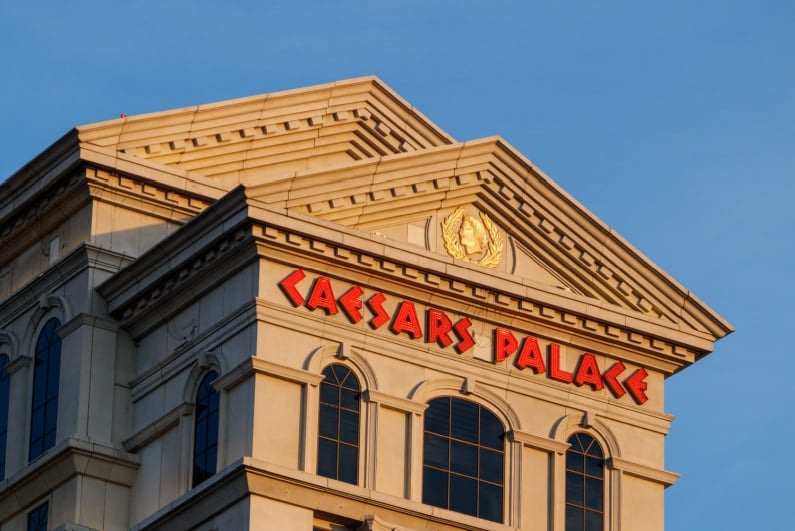
The Caesars stock price has lagged behind rivals like Las Vegas Sands and Wynn Resorts in recent times. There’s a heavy reliance on land-based casinos, especially its eight on the Las Vegas Strip. Tourism traffic to Sin City has been down significantly so far in 2025 as people struggle with the cost of living.
Other casinos popping up outside of Nevada are also taking away interest. One of the most recent was the opening in November of the Hard Rock Casino, which is just a 90-minute drive from Los Angeles. It’s expected to attract 2 million people every year.
Caesars’ adjusted EBITDA was below expectations in Q3
The financials also aren’t looking so rosy. Caesars’ adjusted EBITDA was below expectations in Q3, resulting in a negative reaction from investors. Then it has almost $11bn in debt with relatively low cash on hand.
There are also legacy issues, which led to a $7.8m fine in Nevada due to its dealings with an illegal bookie. An uncertain economic outlook in the US is a cause for pause, especially for a company that doesn’t operate any casinos outside of the country.
2. Star Entertainment
The Australian casino company has been in the headlines for all the wrong reasons over the past couple of years. Things don’t look like they’re improving any time soon, with bankruptcy looming.
Bally’s has given the company a lifeline after committing AU$300m (U$199m) to rescue the company that was rapidly running out of options. The company plans to overhaul its operations in an attempt to get back on track after years of widespread anti-money laundering issues, which have resulted in fines exceeding AU$100m (US$66m).
a company to avoid at all costs
The latest mishap was the sudden exit of CEO Steve McCann in mid-December. Holders of Star Entertainment stock may face a total capital loss or dilution of their positions if new funding is required. Star has failed to inspire confidence that it can turn things around, which is why it’s a company to avoid at all costs despite its destination properties in Queensland and New South Wales.
3. Evoke
William Hill’s owner is struggling to get the show back on the road after a turbulent few years. Regulatory inquiries into its business, senior management changes, and a failed US venture have led to the stock price languishing.
This year was no different, as the company is set to be significantly impacted by the incoming UK tax hikes. Evoke believes this could increase costs each year by up to £135m ($180m). It had to withdraw its medium-term financial targets after the announcement in November about the remote betting duty rising from 21% to 40%.
two-thirds of Evoke’s revenue comes from the UK
About two-thirds of Evoke’s revenue comes from the UK, with many of the 1,200+ retail William Hill sportsbooks under threat of closure. The company’s woes are heightened by its significant £1.82bn ($2.4bn) debt pile.
Evoke’s management is now looking at its options, including selling parts or the entire business. There’s no certainty that a deal will happen, and if it does, the buyer has considerable leverage given the fragile situation in the UK.