
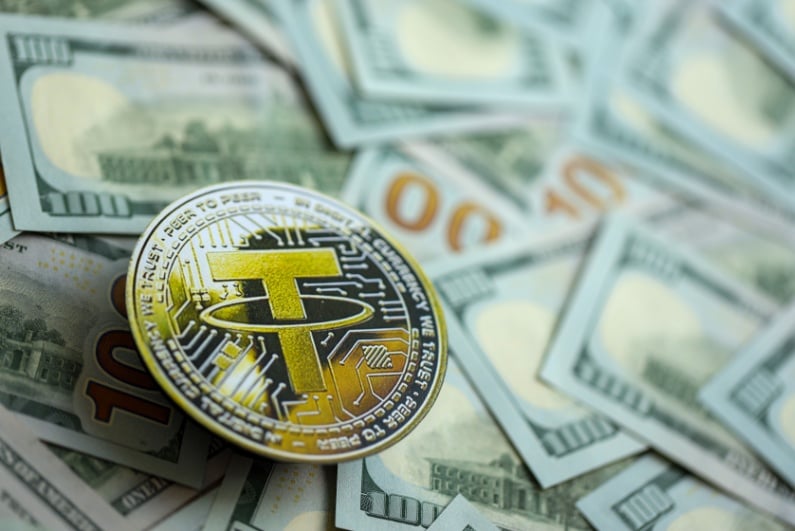
Two sanctioned
Turkey has struck a significant blow against cybercrime after freezing $1bn in cryptocurrency belonging to two prime suspects in a gambling and money laundering ring.
over $500m in assets belonging to Veysel Sahin
Istanbul’s Chief Public Prosecutor revealed that the Turkish government requested the freeze of over $500m in assets belonging to Veysel Sahin on January 30.
Days after the action on Sahin, who is accused of operating an illegal gambling platform and engaging in money laundering, reports in Turkish media revealed the seizure of another $500m in crypto from another individual charged with the same crimes.
Reports cited a Turkish official speaking in confidence that authorities found “financial footprints” of suspected illegal funds by tracing digital cash flows and analyzing crypto assets.
Platform’s rise to prominence
According to Tech Flow, the crypto firm that executed the freeze on behalf of Turkish authorities, Tether Holdings SA, has recently actively helped governments around the world tackle multiple digital currency-related crimes, including drug trafficking, and sanctions evasion.
The blockchain-enabled platform Tether is the issuer of the USDT stablecoin. Its CEO Paolo Ardoino is cited in a recent Bloomberg News interview as stating that his firm verifies information supplied by law enforcement bodies before acting in accordance with the laws of the country involved.
Ardoino said Tether followed the same procedure when cooperating with US agencies “such as the Department of Justice and the FBI.”
Tether’s involvement has caught the attention of tech media who have noted that the crypto giant is upping its cooperation with world law enforcement agencies.
Preferred by criminals
A report from analytics company Elliptic last month revealed that, as of December 2025, Tether and rival Circle Internet Group, which trades in USDC, had blacklisted around 5,700 wallets containing roughly $2.5bn.
According to reports, at the time of the Turkish freeze, three-quarters of the shady wallets held USDT.
Last week, a report from New York-based blockchain analysis firm Chainalysis revealed the world’s dirty cryptocurrency transactions amounted to $82bn in 2025.
Chainalysis Head of National Security Intelligence Andrew Fierman stated that most criminals “particularly favor stablecoins like USDT from Tether and USDC from Circle.”