A mischievous concept
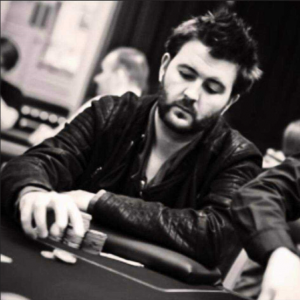
Exactly one year ago, high stakes poker pro Sam Greenwood started an experiment on Substack. The concept was simple and slightly mischievous. Instead of highlighting brilliant plays or solver approved heroics, he would focus on the opposite. Each entry would examine a memorable mistake under the banner “Punt of the Day.”
Twelve months on, the project has quietly built a loyal following among poker fans and professionals alike. That success comes as no surprise because Greenwood is an excellent writer, striking the balance between forensic and facetious, punctilious and playful. In a game increasingly defined by theory and precision, he chooses to highlight the chaos, building his series on the understanding that even elite players will sometimes torch their stacks. The result is a catalogue of hands that reveal just how thin the line can be between brilliance and disaster.
Greenwood stopped by “The Lock-In” this week to discuss a whole host of topics, including his last year as a content creator. It was an illuminating conversation that tackled the issue of AI slop and the preponderance of attention-grabbing short-form bits in our modern poker media landscape. It also looked at the reasons why Punt of the Day has found an audience.
The story inside every hand
Poker hands are often interpreted as stories. Each action by a player represents a clue that shapes the narrative. A check might suggest weakness while a large bet might indicate strength or a bluff designed to represent it. Skilled players don’t just follow the story but interrogate it for its veracity. They construct a mental picture of what their opponent’s range looks like and how it evolves throughout the hand.
Poker players have to make educated guesses.
The thing about poker, though, is it’s a game of incomplete information. Poker players have to make educated guesses. They have to make strategic gambles on the likelihood that their intuitions are correct. Big bluffs and heroic calls can be compelling in the moment but, on reflection, feel undisciplined and rash. These are affectionately called “punts,” and every poker player knows the feeling that follows them.
You replay the hand in your head and try to reconstruct the logic that led you there. At the time, everything seemed to make sense, but, once the cards are revealed, the reasoning suddenly looks absurd. That emotional experience is universal, which I suspect is why Greenwood’s series resonates so much with readers. His chosen hands often feature world class professionals making decisions that feel very familiar. The stakes may be enormous, but the mental process is something that most players recognize.
Pushing the boundaries
At the level where Greenwood spends most of his time, the edges are extremely small. Tournament fields are filled with players who have studied the same solver outputs and who understand the same strategic principles. Few in that arena are giving away easy chips.
such creativity carries risk
In that environment, players constantly search for creative ways to gain an advantage, experimenting with unconventional bet sizes and unusual lines designed to pull opponents away from their preparation. This approach is necessary to stay competitive in tough games, but the downside is that such creativity carries risk. When a player is always pushing the boundaries of strategic logic, they can sometimes go too far, and the result is a spectacular punt.
There is a strange comfort in the realization that even players who spend their lives studying poker can occasionally get lost in their own reasoning. When a top professional makes a catastrophic bluff or an ambitious hero call, it reminds the rest of us that the game is difficult for everyone. Greenwood understands this and how it makes high level strategy content relatable. Focusing on mistakes is his secret sauce.
Humor in the postmortem
Another key ingredient in the success of “Punt of the Day” is the tone that Greenwood brings to the analysis. The hands are given a thorough postmortem, but there is always a sense of humor in the writing. By approaching the hands with a light touch, he avoids turning the mistakes into harsh criticism. Instead, the punts become puzzles to explore. Readers are encouraged to follow the logic step by step and identify the moment where the reasoning begins to drift.
In an era when poker strategy content often revolves around “optimal” play, Greenwood has built something around imperfection and a willingness to laugh at our imperfections. That is why the concept still feels fresh after a year and I sincerely hope I still feel that way after he analyzes a hand that I just sent him from my recent trip to EPT Paris. Why don’t you analyze it, too, and then check out Greenwood’s breakdown on this Sunday’s installment of Punt of the Day.
EPT Paris PokerStars Cup
€825 ($945) buy-in
290 left, 250 paid
The table has noticeably slowed down and tightened, aware that we are probably about 20 hands from the bubble/bag. I have 315K at BB5K. The rest of table has 50K-140K except for one guy who covers me.
I open to 10K with 5♥️4♥️ in the LoJack. The Button is that guy with a bigger stack (400K) and he raises to 30K. I call.
(72,000) Flop J♥️6♥️2♣️
I check, he bets 20K, I call.
(112,000) Turn Q♥️
We both check.
(112,000) River 7♠️
I check, he bets 100K and I shove for 265K. After two minutes, he cry-calls with Q♦️Q♠️ and I double.
Despite the fact that I won this hand, I wondered about almost every decision point. Should I steal with the 5♥️4♥️ given the danger man is on the button? Should I call after he raises, even though I’m getting a great price? Should I consider seizing the initiative and raising the flop with my combo draw? Should I bet the river rather than check it? Is it too thin to shove my hand for value?